

 Views
Views 35 Comments
 April 1, 2026
Investing in a Fresh Noodle Production Line is a significant decision for any food manufacturing facility. The right line can dramatically improve production efficiency, ensure consistent noodle quality, reduce labor costs, and expand your product range. However, with various models, automation levels, and capacities on the market, choosing the right system requires careful consideration. This guide provides a comprehensive overview to help factory managers, production engineers, and procurement specialists make informed decisions.
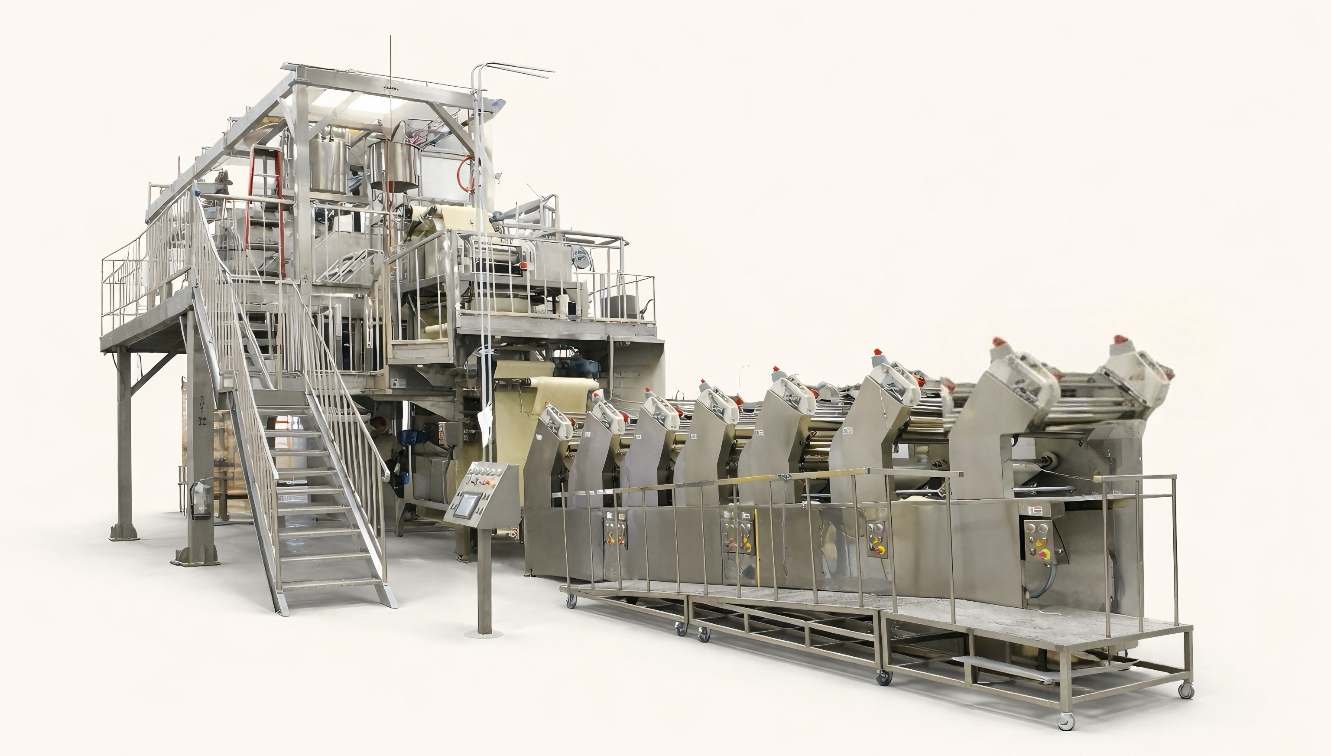
The first step in selecting a fresh noodle production line is evaluating your factory’s production goals:
Daily Output Requirements: Determine how many kilograms or tons of noodles you aim to produce per day. Lines range from small-scale 100–300 kg/day models to industrial 2–5 ton/day systems.
Noodle Types: Consider whether you’ll produce wheat noodles, rice noodles, ramen, or specialty grains. Some lines are versatile, supporting multiple noodle types, while others are optimized for specific dough formulations.
Product Specifications: Thickness, width, and texture are critical. Modern lines allow adjustable sheet thickness and cutting widths to cater to different recipes and packaging needs.
Understanding these parameters ensures that the chosen line aligns with your production volume and product diversity.
Automation directly affects efficiency, labor costs, and consistency:
Manual or Semi-Automatic Lines: Require more operator involvement in feeding, cutting, and stacking noodles. Suitable for smaller factories or artisanal production.
Fully Automatic Lines: Include automated dough feeding, sheeting, slitting, steaming, drying, and stacking. Ideal for high-volume factories seeking consistent quality and minimal labor dependency.
A fully automated line also allows integration with upstream mixers and downstream packaging systems, creating a seamless production flow.
When comparing fresh noodle production lines, assess the quality, durability, and flexibility of each component:
Dough Mixer: Ensure it can handle your preferred flour-to-water ratios and maintains consistent dough texture. Options include vacuum dough mixers for superior uniformity.
Sheeting Rollers: Stainless steel rollers with adjustable thickness settings help achieve consistent noodle texture. Large-diameter rollers (≥350 mm) are ideal for industrial lines.
Slitter & Noodle Combs: High-precision slitting ensures uniform noodle width; interchangeable combs allow multiple thread sizes.
Steamer & Frying Systems (if applicable): For instant noodles or specialty products, check for even heat distribution, energy efficiency, and automated control.
Conveyor System: Food-grade conveyors with reversible and easy-clean design ensure smooth dough transfer and hygiene compliance.
Evaluating these components ensures long-term reliability and low maintenance costs.
Efficiency is a major concern for high-volume noodle factories. Consider the following:
Throughput: Check the line’s maximum output per hour or day.
Cycle Time: Evaluate how quickly dough can be fed, rolled, cut, and conveyed.
Downtime: Features like VFD motor drives, automatic speed synchronization, and easy-clean systems reduce maintenance downtime.
Energy Efficiency: Lines with low-power motors and optimized heating/drying systems lower operational costs.
A production line optimized for efficiency can significantly increase your return on investment.
Compliance with food safety standards is non-negotiable:
Materials: Look for SS304 stainless steel for all contact surfaces.
Cleaning & Maintenance: Detachable panels, reversible conveyors, and easy-access components reduce cleaning time.
Automation of Processes: Automated feeding, rolling, and stacking minimize human contact, reducing contamination risks.
A hygienic production line ensures your factory meets local and international food safety regulations.
Modern factories often require flexible production capabilities:
Ability to produce multiple noodle types on the same line.
Adjustable noodle thickness, width, and density.
Compatibility with fresh, non-fried, or oil-free products.
A customizable line allows you to respond to market trends and expand your product portfolio without significant additional investment.
Choosing the right supplier is as important as the equipment itself:
Experience: Suppliers with a proven track record in fresh noodle production understand production challenges and can recommend tailored solutions.
After-Sales Support: Reliable service, training, and spare parts availability minimize downtime and operational risks.
References and Case Studies: Visiting operational factories or checking references helps validate supplier claims.
While upfront costs are important, focus on total cost of ownership:
Initial investment includes machinery, installation, and factory modifications.
Operational costs cover energy, labor, maintenance, and consumables.
Return on investment is maximized by higher output, consistent quality, and reduced labor requirements.
Balancing quality, efficiency, and cost ensures a line that is profitable over the long term.
Investing in a fresh noodle production line is a long-term decision:
Consider lines that allow future expansion or integration with packaging and seasoning systems.
Choose technology that supports energy-saving upgrades or automation enhancements.
Staying adaptable ensures your factory can meet changing consumer demands and industry trends.
Selecting the right Fresh Noodle Production Line requires evaluating production needs, automation levels, component quality, efficiency, hygiene, flexibility, supplier reliability, and total cost of ownership. By carefully considering these factors, factories can achieve:
Higher production efficiency
Consistent, high-quality noodles
Lower labor and operational costs
Greater adaptability to market demands
Investing wisely in a modern, automated, and scalable fresh noodle production line positions your factory for long-term success in the competitive food processing industry.


 English