

 Views
Views 35 Comments
 April 28, 2026
Fresh noodle production lines are widely used in central kitchens, food factories, and commercial noodle manufacturing plants. Because fresh noodles are usually high-moisture, short shelf-life food products, the safety requirements for production equipment are significantly higher than those for dry food machinery.
A well-designed system is not only focused on output capacity, but also on food hygiene, operator safety, and stable production control.
Below are the key safety features a high-quality fresh noodle production line should include, based on industry standards and top-performing equipment solutions in the market.
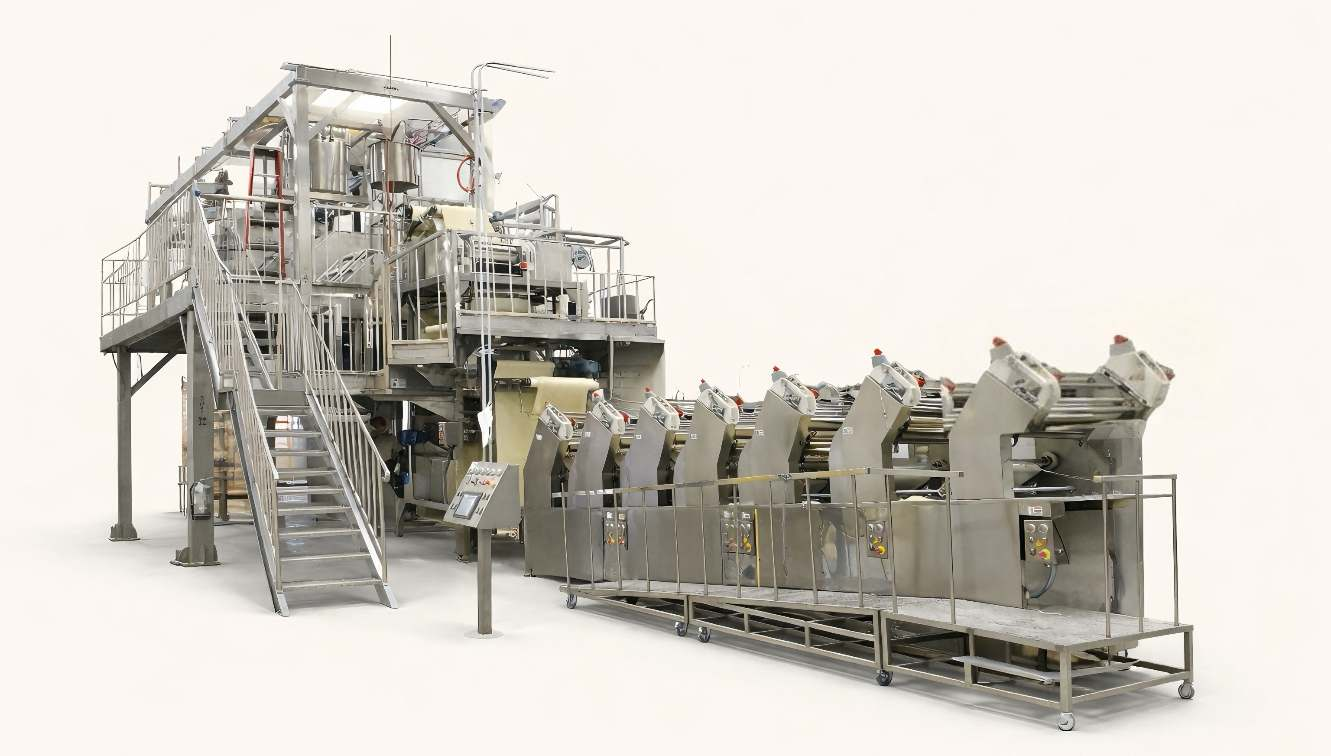
The foundation of any safe noodle production system is material compliance.
Core requirements include:
304 or 316 stainless steel for all food-contact parts
Food-grade conveyor belts (PU/PE materials)
Non-toxic seals and gaskets
Corrosion-resistant frame structure
These materials help prevent chemical migration and bacterial contamination during processing.
Food safety risks often come from residue buildup in hidden machine areas. That’s why structural hygiene design is critical.
Key design features:
Seamless welding on dough-contact surfaces
Rounded internal corners to prevent residue accumulation
Modular components for fast disassembly and cleaning
Open-frame layout for inspection access
Elevated structure to avoid water pooling
A cleanable structure directly reduces microbial growth risk and improves production safety.
Modern production lines are equipped with multiple automated safety controls to protect both operators and equipment.
Typical safety systems include:
Emergency stop (E-stop) buttons at multiple stations
Motor overload protection
Automatic shutdown during belt blockage
Electrical leakage protection systems
Door interlock safety sensors
These systems ensure immediate response in abnormal conditions and reduce accident risks.
Fresh noodle quality is highly sensitive to environmental conditions, especially during dough mixing and resting stages.
A safe production line may include:
Dough temperature monitoring sensors
Controlled cooling or ventilation systems
Environmental humidity regulation
Real-time process adjustment feedback
Stable environmental control ensures consistent texture and reduces batch variation risks.
Preventing airborne contamination is essential for maintaining food safety standards.
High-quality systems typically feature:
Fully enclosed conveying systems
Sealed flour feeding units
Air filtration in processing zones
Positive pressure protection to block external dust
This reduces the risk of foreign particles entering the production process.
Electrical reliability is a major factor in continuous food production environments.
Important safety elements include:
Waterproof control cabinets (IP65 or higher)
Separate wiring for wet and dry areas
PLC intelligent control system
Grounding and surge protection
Fault alarm and diagnostic system
These features ensure stable operation and reduce downtime caused by electrical failures.
Operator safety is a key part of modern food machinery engineering.
Recommended safety features:
Protective covers for rollers and cutters
Anti-pinch mechanical structures
Safety sensors on access panels
Non-slip working platforms
Clear safety warning labels
These designs reduce physical injury risks during daily operation.
High-end noodle production lines increasingly integrate digital monitoring systems for enhanced safety control.
Functions may include:
Production batch tracking
Real-time process data recording
HACCP-compatible monitoring systems
IoT-based equipment status tracking
This supports food compliance requirements for export markets.
Efficient cleaning systems help maintain long-term hygiene safety.
Common features include:
CIP (Clean-in-Place) system compatibility
Quick-drain structure design
Smooth internal surface finishing
Anti-bacterial material coatings (optional)
Reduced cleaning time also improves production efficiency.
For global market access, equipment must meet recognized standards such as:
CE certification for mechanical safety
ISO 22000 food safety management requirements
FDA-compliant food contact materials (for US market)
Local industrial food machinery regulations
Compliance ensures safer operation and easier export approval.
A safe fresh noodle production line is built on a combination of hygienic engineering, automated protection systems, electrical safety design, and contamination control measures.
When evaluating equipment, priority should be given to:
Food-grade material structure
Easy-clean hygienic design
Intelligent safety protection systems
Stable environmental control
International compliance standards
These features not only protect operators and consumers, but also ensure consistent product quality and long-term production stability.


 English